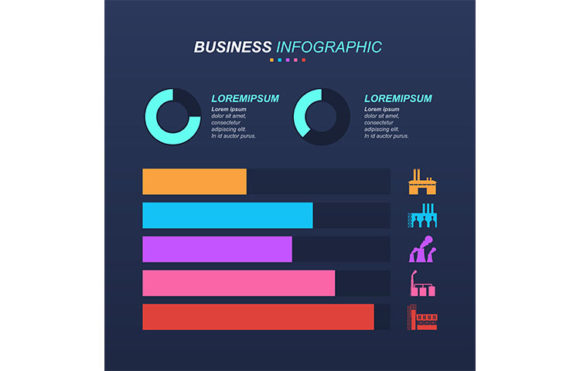
Statistical Factory Industrial Business: Integrating Vector Analytics into Professional Workflows
In the landscape of modern business communication, the ability to translate complex industrial data into clear, actionable visuals is a critical skill. The concept of a Statistical Factory Industrial Business encompasses more than just manufacturing output; it represents the intersection of heavy industry metrics, financial analytics, and strategic planning. For professionals ranging from marketing directors to freelance designers, utilizing high-quality visual assets like bar chart graph diagrams and financial infographics is essential for bridging the gap between raw numbers and stakeholder understanding. These assets are not merely decorative elements but functional tools that facilitate decision-making, reporting, and educational processes across various sectors.
When we discuss Statistical Factory Industrial Business in a practical context, we are referring to a specific category of visual resource designed to handle dense information without sacrificing aesthetic integrity. Created with Adobe Illustrator and available in vector EPS and high-resolution JPEG formats, these graphics serve as foundational components in larger projects. They allow users to maintain consistency across annual reports, pitch decks, and internal dashboards while ensuring that the underlying message regarding economy and business performance remains sharp and scalable.
The Role of Visual Assets in Pre-Project Planning
Before a project officially launches or a report is drafted, the selection of appropriate visual frameworks sets the trajectory for success. In the planning phase of a Statistical Factory Industrial Business presentation, the primary goal is to establish a visual hierarchy that mirrors the logical flow of the data. Professionals should evaluate whether the chosen bar chart graph diagram aligns with the narrative arc of their content. For instance, if the objective is to demonstrate year-over-year growth in factory output, a vertical bar chart provides immediate comparability. Conversely, horizontal layouts may be better suited for ranking different industrial sectors by revenue.
During this preparatory stage, compatibility is a major factor. Because these illustrations are created with Adobe Illustrator, they offer unparalleled flexibility for teams working within the Creative Cloud ecosystem. However, even for those who do not use vector software, the inclusion of high-resolution JPEGs ensures accessibility. Planners must assess the technical requirements of the final deliverable early on. If the end product is a large-format trade show banner, the vector EPS file is non-negotiable to prevent pixelation. If the asset is destined for a web-based blog post or an email newsletter, the optimized JPEG version reduces load times while maintaining clarity on standard displays.
Effective planning also involves auditing existing brand guidelines against the new statistical assets. A Statistical Factory Industrial Business infographic often comes with a default color palette that reflects traditional industrial tones—steels, blues, and safety oranges. Before implementation, teams should map these colors to their corporate identity. This pre-work prevents disjointed design later in the process and ensures that the financial analytics feel like a native part of the organization’s communication strategy rather than an external add-on.
Execution and Customization During Active Workflows
Once the project moves from planning to execution, the versatility of vector-based Statistical Factory Industrial Business assets becomes apparent. In the active creation phase, designers and analysts often need to modify generic templates to reflect specific datasets. Working in Adobe Illustrator allows for the isolation of individual graphical elements. You can adjust the height of bars, change axis labels, or regroup legend items without degrading the overall quality of the image. This malleability is crucial when dealing with live data where figures may shift right up until publication.
For users relying on the high-resolution JPEG format during execution, the workflow shifts toward composition and layout rather than direct manipulation of the chart data. In this scenario, the Statistical Factory Industrial Business graphic serves as a background or anchor element. Text overlays, callout boxes, and supplementary icons can be layered on top using tools like Photoshop, Canva, or PowerPoint. The key here is to respect the negative space intentionally left by the original designer. High-quality industrial infographics are designed with "breathing room" specifically to accommodate this type of integration, allowing users to add context without obscuring the core financial analytics.
Collaboration is another critical aspect of the execution phase. When multiple stakeholders are involved, file format dictates the feedback loop. Sharing the editable EPS file with a senior designer allows for structural changes based on executive feedback. Meanwhile, sharing the JPEG with a copywriter or subject matter expert facilitates text verification without risking accidental alteration of the vector paths. Understanding which version of the Statistical Factory Industrial Business asset to deploy at each stage of collaboration streamlines the approval process and reduces version control errors.
Practical Implementation Tips for Data Integrity
- Maintain Aspect Ratios: When resizing vector charts in Illustrator, always hold the Shift key or use the transform panel to lock proportions. Stretching a bar chart distorts the visual representation of data, potentially misleading the audience about the magnitude of differences between categories.
- Verify Font Compatibility: Vector files may contain fonts that are not installed on your system. Before editing a Statistical Factory Industrial Business graphic, check for missing font warnings. Replace them with approved brand typefaces immediately to ensure the financial analytics remain legible and professional.
- Color Mode Management: Determine if your final output is for print (CMYK) or screen (RGB). Industrial business graphics often default to CMYK due to their print origins. Converting to RGB early in the digital workflow prevents unexpected color shifts, particularly with vibrant accent colors used in bar charts.
- Layer Organization: Keep data layers separate from decorative backgrounds. Well-organized vector files allow you to toggle visibility, making it easier to update statistics in future quarters without rebuilding the entire Statistical Factory Industrial Business illustration from scratch.
Post-Project Application and Long-Term Asset Management
The utility of a Statistical Factory Industrial Business resource extends well beyond the completion of a single task. After a report is published or a presentation is delivered, these assets should be archived systematically for future reuse. Establishing a centralized digital asset management system where both EPS and JPEG versions are stored together with metadata tags (e.g., "manufacturing," "Q3 revenue," "vector," "industrial") saves significant time during subsequent reporting cycles. This organizational discipline transforms a one-time purchase into a long-term library of business intelligence visuals.
Post-project analysis also provides an opportunity to evaluate the effectiveness of the chosen visualization style. Did the bar chart graph diagram successfully convey the intended trend? Were stakeholders able to interpret the financial analytics quickly? Gathering this feedback informs future selections. Perhaps the next iteration requires a line graph instead of bars, or maybe the industrial aesthetic needs to be softened for a consumer-facing audience. Treating the Statistical Factory Industrial Business asset as a variable in a continuous improvement cycle enhances communication efficacy over time.
Furthermore, these graphics often find secondary life in derivative content. A comprehensive industrial infographic used in a white paper can be cropped into smaller segments for social media posts, blog headers, or email signatures. The high resolution of the source JPEG and the scalability of the EPS ensure that these derivatives maintain professional quality regardless of the platform. This multi-purpose approach maximizes the return on investment for creative resources and maintains visual consistency across disparate marketing channels.
Integration with Broader Business Ecosystems
A Statistical Factory Industrial Business illustration does not exist in a vacuum; it interacts dynamically with other tools and platforms within the organizational stack. For data analysts, these vectors often serve as the final polish layer atop exports from Excel, Tableau, or Power BI. While business intelligence tools excel at processing data, they sometimes lack the refined aesthetic required for high-stakes external communications. Importing a clean vector template and overlaying accurate data points combines analytical rigor with design excellence.
In educational and training environments, these infographics play a vital role in knowledge transfer. Complex concepts regarding supply chain logistics or factory efficiency are difficult to grasp through text alone. A well-designed Statistical Factory Industrial Business diagram acts as a cognitive scaffold, helping employees and students visualize abstract relationships. When integrated into Learning Management Systems (LMS) or training manuals, the high-resolution JPEG format ensures compatibility across devices, from desktop monitors to mobile tablets used on the factory floor.
For freelancers and agencies serving multiple clients, maintaining a diverse library of Statistical Factory Industrial Business assets allows for rapid prototyping. Instead of building custom charts from zero for every pitch, professionals can insert these pre-made vectors to demonstrate capability and vision. This efficiency enables faster turnaround times and allows more budget to be allocated to bespoke strategy rather than basic asset creation. The availability of both vector and raster formats means that whether the client needs a billboard or a business card, the same core asset can adapt to the requirement.
Quality Control and Usability Considerations
Ensuring the ongoing usability of Statistical Factory Industrial Business graphics requires attention to detail regarding quality control. Vectors are mathematically perfect, but they can become bloated if not managed correctly. Excessive anchor points or embedded raster images within the EPS file can slow down rendering and increase file size. Periodically cleaning up these files using Illustrator’s simplification tools ensures they remain lightweight and responsive. For JPEGs, monitoring compression artifacts is equally important; repeated saving can degrade quality, so always archive the master high-resolution version separately from working copies.
Usability also encompasses accessibility. When deploying these infographics digitally, alt text and descriptive captions are mandatory. A Statistical Factory Industrial Business chart conveys specific economic information that screen readers cannot interpret visually. Providing a textual summary of the bar chart data ensures compliance with accessibility standards and broadens the reach of your content. Additionally, considering color blindness when customizing the palette is a best practice. Ensuring sufficient contrast between bars and backgrounds guarantees that the financial analytics are readable by all audience members.
Ultimately, the value of a Statistical Factory Industrial Business asset lies in its ability to streamline the translation of industrial complexity into visual clarity. By understanding the technical nuances of vector and raster formats, integrating these tools thoughtfully into pre-production and execution workflows, and managing them as long-term strategic resources, professionals can elevate their business communications. Whether used for internal benchmarking, external marketing, or educational purposes, these illustrations provide the structural backbone necessary for effective data storytelling in the industrial sector.