Graph Diagram Financial Analytic: Elevating Business Intelligence Through Vector Design
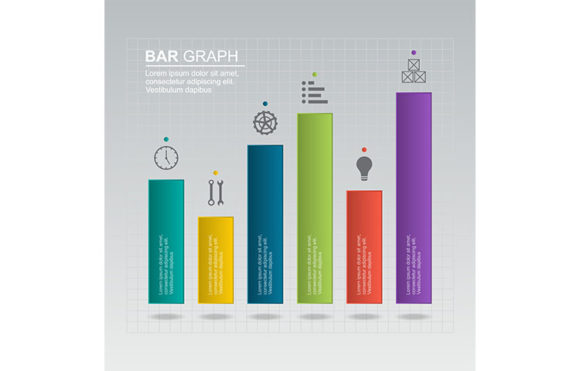
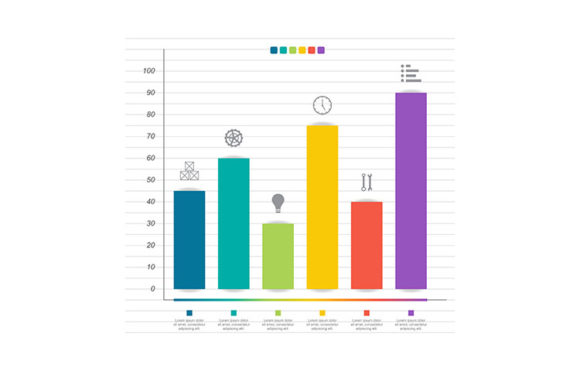
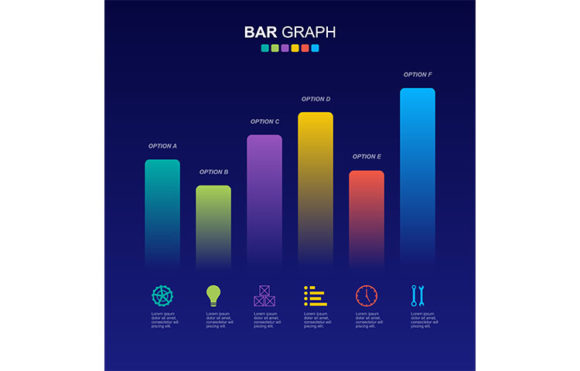
In the modern landscape of corporate communication and data science, the ability to translate complex numerical datasets into digestible visual narratives is a critical skill. The Graph Diagram Financial Analytic serves as more than just a decorative element in reports; it is a fundamental tool for cognitive processing, allowing stakeholders to grasp trends, outliers, and correlations instantly. When professionals utilize high-quality assets like the Bar Chart Graph Diagram Financial Analytic Statistical Business Infographic Illustration, they are not merely inserting an image but deploying a strategic communication device. This specific illustration, crafted with precision in Adobe Illustrator and available in both vector EPS and high-resolution JPEG formats, bridges the gap between raw statistical analysis and persuasive business storytelling.
The Strategic Role of Visual Analytics in Decision Making
Financial analytics often suffers from a presentation deficit. Spreadsheets containing thousands of rows of data are essential for accuracy but detrimental to engagement. The human brain processes visual information 60,000 times faster than text, making the graphical representation of financial health a necessity rather than a luxury. A well-executed graph diagram functions as a cognitive shortcut, reducing the mental load required to understand fiscal performance.
When integrating a Bar Chart Graph Diagram Financial Analytic Statistical Business Infographic Illustration into a project, the primary objective is clarity. This type of visualization excels at comparative analysis, allowing viewers to immediately discern differences in revenue streams, expense categories, or quarterly growth. The aesthetic quality of the graphic matters significantly here. A jagged, pixelated, or poorly colored chart can subconsciously signal unprofessionalism or data unreliability. Conversely, a crisp, professionally designed vector graphic conveys authority and attention to detail, reinforcing trust in the underlying data being presented.
Technical Superiority of Vector EPS Formats
One of the defining characteristics of professional-grade financial illustrations is their format versatility. The availability of this graphic in vector EPS format is a crucial advantage for designers and analysts alike. Unlike raster images that rely on a fixed grid of pixels, vector graphics are defined by mathematical paths. This distinction has profound practical implications for business projects.
- Infinite Scalability: Financial reports appear in various mediums, from standard A4 PDFs to massive conference hall banners. An EPS file can be scaled to any dimension without losing sharpness or introducing artifacts, ensuring the graph diagram remains legible and impactful regardless of size.
- Editability and Customization: Because the asset is created with Adobe Illustrator, every element—from axis lines to bar colors—is fully editable. Organizations can adjust the color palette to match strict brand guidelines, modify labels to reflect current terminology, or alter the composition to fit unique layout constraints without needing to recreate the graphic from scratch.
- File Size Efficiency: Despite their complexity, vector files are often smaller than high-resolution raster equivalents, which helps keep digital reports lightweight and email-friendly while maintaining print-ready quality.
For users who do not have access to vector editing software, the inclusion of a high-resolution JPEG ensures immediate usability. This dual-format approach makes the illustration suitable for a broad audience, ranging from professional graphic designers working in agencies to business owners creating internal presentations in PowerPoint or Keynote.
Applications Across Diverse Professional Sectors
The utility of a Graph Diagram Financial Analytic extends far beyond traditional accounting departments. The versatility of this statistical business infographic illustration allows it to serve multiple functions across different industries and project types. Understanding these varied applications helps maximize the return on investment when acquiring such design assets.
Corporate Reporting and Investor Relations
In annual reports and investor decks, space is at a premium. Stakeholders need to see year-over-year growth, profit margins, and market share expansion at a glance. The bar chart configuration within this illustration is ideal for displaying discrete data points over time. By utilizing a clean, modern aesthetic, companies can present negative news with transparency or highlight positive trends with enthusiasm, all while maintaining a consistent visual identity throughout the document.
Educational and Academic Research
Educators and researchers frequently struggle to make statistical concepts accessible to students or non-specialist readers. A polished Graph Diagram Financial Analytic serves as an excellent teaching aid, demonstrating proper axis labeling, legend placement, and color coding. In academic publishing, where figure quality directly impacts perception, using a vector-based illustration ensures that charts remain sharp even after the compression processes involved in journal submission and printing.
Marketing and Content Creation
Content marketers and bloggers often need to break up long-form text with relevant visuals to improve dwell time and SEO performance. A generic stock photo of people shaking hands adds little value, whereas a customized financial graph supports the article's thesis. Because this illustration is technology-focused and business-oriented, it pairs perfectly with articles discussing fintech, economic forecasting, or startup metrics. The ability to edit the EPS file allows creators to update the data in the graphic to match their specific content, transforming a template into original intellectual property.
Design Principles for Effective Financial Visualization
Owning a high-quality asset like the Bar Chart Graph Diagram Financial Analytic Statistical Business Infographic Illustration is only the first step. To truly leverage its potential, users must apply sound design principles during implementation. The graphic provides the foundation, but the user provides the context.
Data-Ink Ratio: Coined by statistician Edward Tufte, this principle suggests that every drop of ink (or pixel) should serve a purpose. When customizing this illustration, resist the urge to add unnecessary 3D effects, heavy gradients, or decorative clutter. The strength of this vector asset lies in its clean lines and professional structure. Maintain ample whitespace around the chart to prevent visual crowding, especially when embedding it in dense text layouts.
Color Semantics: Color in financial analytics is never neutral. Red typically signifies loss or danger, while green indicates growth. However, accessibility must also be considered. Approximately 8% of men are colorblind, meaning red-green distinctions may be invisible to them. When editing the EPS file, consider using patterns, varying saturation levels, or direct labeling alongside color to ensure the graph diagram is universally readable. The vector nature of the file makes adding these accessibility features straightforward.
Contextual Integrity: A graph without context is meaningless. Ensure that titles, subtitles, and source citations are integrated seamlessly with the illustration. Since this asset was created in Adobe Illustrator, typography can be matched precisely to the surrounding document, creating a cohesive look that suggests the chart was bespoke rather than borrowed.
Navigating Format Selection for Specific Workflows
Choosing between the vector EPS and high-resolution JPEG versions depends entirely on the end-use case. Misunderstanding these formats can lead to workflow bottlenecks or subpar output quality.
- Print Production: Always use the EPS format for brochures, annual reports, and business cards. Printers require vector data to produce crisp edges at high DPI. Using a JPEG in professional print runs risks blurriness or visible pixelation.
- Digital Presentations: Modern versions of PowerPoint and Keynote support SVG and EPS import, allowing for on-slide editing. If your software does not support vectors, use the high-res JPEG. Avoid resizing JPEGs significantly, as this degrades quality.
- Web Publishing: While JPEGs are standard for web, converting the EPS to SVG (Scalable Vector Graphics) is increasingly preferred for responsive websites. SVGs scale perfectly on mobile devices and retina screens. If conversion is not possible, the provided high-resolution JPEG serves as a reliable fallback, provided it is optimized for web speed.
- Video Production: For motion graphics or explainer videos, the EPS file is indispensable. Animators can separate the bars, axes, and labels into individual layers within After Effects or similar software, enabling dynamic animations that bring the financial data to life.
The Intersection of Technology and Aesthetics
The description of this illustration highlights its focus on "business and technology." This thematic intersection is vital in contemporary analytics. Financial data is no longer static; it is generated by algorithms, processed by AI, and delivered through digital dashboards. The visual style of a Graph Diagram Financial Analytic must reflect this technological reality.
Clean geometry, precise alignment, and modern color palettes signal a tech-forward approach. When audiences view a chart that looks dated or hand-drawn, they may unconsciously question the sophistication of the underlying analysis. By utilizing a graphic created with industry-standard tools like Adobe Illustrator, presenters align their visual output with the technological rigor of their analytical methods. This alignment reinforces the narrative that the organization is modern, competent, and data-literate.
Furthermore, the modular nature of vector illustrations supports iterative workflows. In agile business environments, data changes rapidly. A financial report drafted in January may need updating by March. With a raster image, updating data often means recreating the entire chart. With the EPS version of this Bar Chart Graph Diagram Financial Analytic Statistical Business Infographic Illustration, updates are surgical and efficient. Users can simply adjust the height of a bar or change a numerical label, preserving all other styling and formatting. This efficiency reduces turnaround time and minimizes the risk of introducing visual inconsistencies during revisions.
Ensuring Long-Term Value and Compatibility
Investing in premium graphic assets is a decision based on long-term utility. The compatibility of this illustration with Adobe Illustrator ensures longevity. As the industry standard for vector graphics, Illustrator files maintain backward and forward compatibility better than proprietary formats. This means that an EPS file created today will likely be editable ten years from now, protecting the asset against obsolescence.
Additionally, the high-resolution JPEG component acts as a universal adapter. Not every stakeholder has design software, but everyone can view a JPEG. Including this format democratizes access to the visual asset, allowing team members without specialized training to include professional-grade graphics in emails, internal memos, or quick drafts. This flexibility makes the illustration suitable for various projects, from high-stakes external communications to informal internal collaboration.
Ultimately, the effectiveness of a Graph Diagram Financial Analytic lies in its ability to serve as a transparent window into complex data. By combining technical excellence in vector format with thoughtful application and adherence to design best practices, professionals can transform abstract numbers into compelling stories. Whether used by a researcher explaining economic theory, a CEO presenting quarterly results, or a designer building a fintech website, this illustration provides the structural integrity and aesthetic polish necessary to communicate with confidence and clarity.