Presentation Template - Seatbelt: Streamlining Visual Communication Workflows
In the modern professional landscape, the ability to communicate complex ideas quickly and visually is a critical skill. Whether you are pitching a startup, reporting quarterly metrics, or showcasing a creative portfolio, the vehicle for your message matters as much as the content itself. The Presentation Template - Seatbelt serves as a foundational asset in this communication process, bridging the gap between raw data and compelling narrative. Rather than viewing a template as merely a decorative skin, productive professionals understand it as a structural framework that enforces consistency, saves time, and elevates the perceived value of the information being presented.
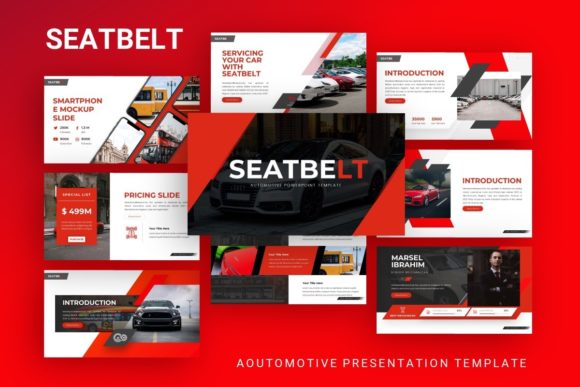
Seatbelt is designed to function across a spectrum of use cases, from corporate business profiles and pitch decks to personal portfolios and photography showcases. Its utility lies in its versatility and technical construction. By providing 35 distinct slides per template, handcrafted infographics, and master slide architecture, it allows users to bypass the initial friction of design and focus immediately on content strategy. This shift from formatting to storytelling is where the true efficiency gain occurs in any presentation workflow.
Integrating Templates into the Pre-Production Phase
The most effective use of the Presentation Template - Seatbelt begins before a single word of final copy is written. During the planning and outlining stage, the template acts as a visual storyboard. With 35 unique slide layouts available, users can map out the flow of their argument or narrative arc without getting bogged down in alignment issues or font selection. This pre-production integration ensures that the structure of the presentation supports the logical progression of ideas.
For entrepreneurs preparing a pitch deck, this phase involves selecting specific slides that correspond to standard investor expectations, such as problem statements, market size, and financial projections. For creative agencies or freelancers building a portfolio, the planning phase might involve curating images that fit the provided picture placeholders. By treating the template as a checklist of necessary narrative components, you ensure no critical information is overlooked. The included documentation file further aids this stage by clarifying which assets are editable and how best to utilize the master slides for global changes.
Leveraging Master Slides for Global Consistency
A common bottleneck in presentation creation is maintaining visual consistency across dozens of slides. Seatbelt addresses this through its Master Slide architecture. Understanding how to interact with these master layers is essential for long-term efficiency. Instead of formatting individual elements on every slide, users should apply branding, logo placement, and color palette adjustments at the master level. This ensures that any future additions or modifications automatically inherit the correct styling.
This feature is particularly valuable for teams or organizations where multiple stakeholders may edit the deck over time. It establishes a guardrail against brand dilution and formatting errors. When integrating Seatbelt into a broader corporate workflow, the master slides serve as the single source of truth for visual identity, allowing team members to focus on updating content rather than fixing broken layouts.
Execution and Content Customization Strategies
Once the structure is defined, the execution phase involves populating the template with specific content. The Presentation Template - Seatbelt is engineered for easy customization, but maximizing this requires a disciplined approach to asset management. The template includes pixel-perfect illustrations and resizable graphics, yet these should be treated as starting points rather than final solutions. Users should assess whether the default iconography aligns with their specific industry context or if custom vector icons (included in the files) offer better semantic clarity.
The drag-and-drop picture placeholders significantly reduce the friction of image insertion. However, practical implementation requires attention to image quality and aspect ratio. While the template handles resizing, using high-resolution source material ensures the final output remains crisp on large projection screens or high-DPI displays. For photographers and creatives, this means preparing a curated folder of optimized assets before opening PowerPoint. For business users, it means ensuring charts and graphs are legible when placed within the infographic frames.
- Vector Icon Utilization: Use the included vector icons to maintain scalability. Avoid rasterizing icons unless necessary, as this preserves editability for future updates.
- Infographic Adaptation: Handcrafted infographics in PowerPoint are powerful but dense. Simplify data points to match the visual capacity of the slide; do not force excessive text into graphical elements.
- Placeholder Discipline: Always use the designated placeholders rather than pasting images directly onto the slide background. This maintains the responsive layout logic built into the template.
Compatibility and Technical Workflow
Technical compatibility is a frequent point of failure in presentation workflows. Seatbelt is delivered as a .PPTX file, ensuring broad compatibility with Microsoft PowerPoint and reasonable interoperability with Keynote and Google Slides. However, professionals must verify font availability and animation rendering when moving between platforms. The safest workflow involves keeping the primary editing environment within PowerPoint to preserve the integrity of the master slides and smart art features.
When collaborating with others, establish a protocol for file naming and version control early. Because the template includes extensive editable graphics, file sizes can grow. Regularly compressing media and removing unused master layouts can keep the file performant. Additionally, while the demo images provide excellent visual inspiration, they are not included in the download. Users must have a clear licensing strategy for their own imagery to avoid legal issues during commercial deployment.
Post-Presentation Maintenance and Asset Reuse
The lifecycle of a presentation does not end when the talk is delivered. The Presentation Template - Seatbelt supports post-project workflows through its modular design. After a successful pitch or report, the deck can be archived as a master reference. Specific slides that performed well can be extracted and saved to a personal or organizational slide library for future reuse. This transforms a one-time project into a reusable knowledge asset.
For educators and trainers, this reusability is paramount. A core curriculum deck can be updated seasonally without redesigning the visual framework. For marketers, campaign results can be standardized using the same infographic styles, making year-over-year comparisons visually intuitive. The key to this longevity is resisting the urge to "break" the template with ad-hoc formatting. Adhering to the established grid and style guide ensures that today’s work remains compatible with next year’s updates.
Quality Control and Final Review
Before exporting or presenting, a rigorous quality control check is necessary. Even with a pixel-perfect template, user error can introduce inconsistencies. Review the deck in "Slide Sorter" view to check for visual rhythm and flow. Ensure that all placeholder text has been replaced and that no default lorem ipsum remains. Verify that all resizable graphics have maintained their proportions and that text has not overflowed its containers due to content expansion.
Test the presentation on the actual hardware that will be used for delivery. Colors and contrast can vary significantly between laptop screens and projectors. The handcrafted nature of Seatbelt’s graphics generally ensures high fidelity, but environmental factors can alter perception. Having a PDF backup is always recommended as a fail-safe against font substitution or rendering issues on unfamiliar machines.
Strategic Value Across Different User Personas
The adaptability of Presentation Template - Seatbelt makes it relevant to diverse professional workflows, though the application differs by role. Understanding these nuances helps users extract maximum value.
For Startups and Entrepreneurs: The primary value is speed and credibility. Investors judge decks quickly. Using a polished, professional template signals competence and attention to detail. The 35-slide variety covers every potential question in a due diligence process, allowing founders to prepare comprehensive backup slides without cluttering the main narrative.
For Creative Agencies and Freelancers: The template serves as a portfolio container that doesn't compete with the work itself. The clean aesthetics and robust image placeholders allow the client's work to take center stage. The ability to easily customize colors means the portfolio can be subtly tailored to match a prospective client’s brand during pitches, demonstrating empathy and alignment.
For Corporate Teams and Educators: Standardization is the goal. Seatbelt reduces the cognitive load associated with formatting, allowing teams to focus on data accuracy and pedagogical clarity. The master slide system ensures that even junior staff can produce on-brand materials without extensive design training, democratizing high-quality communication within the organization.
Optimizing for Search and Digital Distribution
In an era where presentations are often shared digitally before or after a live event, SEO and accessibility considerations extend to slide decks. When saving the finalized Seatbelt presentation, utilize file properties to add descriptive metadata, tags, and author information. If converting to PDF for web distribution, ensure alt-text is applied to images and infographics. This makes the content accessible to screen readers and indexable by search engines, extending the reach of the material beyond the immediate audience.
Ultimately, the Presentation Template - Seatbelt is more than a collection of attractive slides; it is a productivity tool that structures the communication process. By leveraging its master slides, respecting its grid systems, and integrating it thoughtfully into pre-production, execution, and post-project workflows, professionals can transform presentation creation from a stressful chore into a streamlined, strategic advantage. The result is not just a better-looking deck, but a clearer, more persuasive message delivered with greater confidence and efficiency.