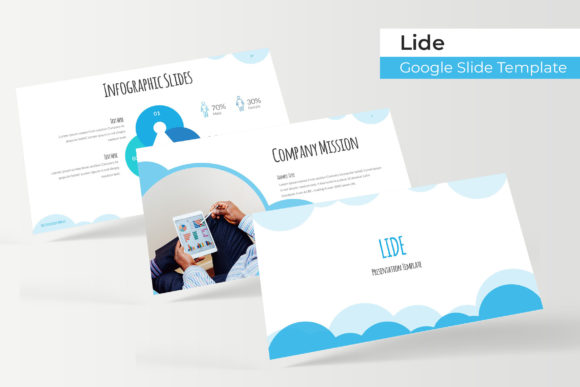
Lide Google Slide Template: A Practical Asset for Modern Presentations
Creating a compelling presentation often feels like a battle between content and design. You have the data, the strategy, or the lesson plan ready, but translating that into a visual format consumes hours of valuable time. The Lide Google Slide Template addresses this specific friction point by providing a comprehensive design system rather than just a collection of pretty backgrounds. With 150 total slides distributed across five distinct premade color themes, this template is engineered for users who need professional consistency without starting from scratch. Whether you are pitching to investors, teaching a complex subject, or showcasing a creative portfolio, Lide offers a structured foundation that adapts to your narrative flow.
Streamlining Visual Communication for Professionals
For entrepreneurs and marketers, the primary value of Lide lies in its ability to maintain brand coherence while allowing for rapid iteration. The template includes 30 slides for each of the five color variations, meaning you can create multiple deck versions for different audiences without breaking visual continuity. Imagine preparing a quarterly review where the financial data needs a serious, muted tone, while the upcoming product launch requires vibrant energy. Instead of hunting for two separate templates that clash stylistically, you can utilize the same master slide architecture with different color presets.
This versatility extends to the handcrafted infographics included in the package. Unlike generic chart builders that force your data into rigid boxes, these graphics are designed as resizable and editable elements. A marketing analyst can drag and drop new metrics into a pre-designed comparison slide, confident that the alignment and typography will remain pixel-perfect. This reduces the cognitive load during high-pressure preparation periods, allowing you to focus on interpreting the data rather than fixing spacing issues at 2 AM before a big meeting.
Educational and Instructional Applications
Educators and trainers face a unique challenge: keeping an audience engaged through long-form content without causing visual fatigue. The Lide Google Slide Template supports this through dedicated section break slides and gallery layouts. When teaching a multi-hour workshop or a semester-long course, these transition slides act as visual palate cleansers, signaling to students that a new topic is beginning. This subtle psychological cue helps reset attention spans and organizes information into digestible chunks.
Furthermore, the picture placeholders are designed with real-world classroom scenarios in mind. Teachers often need to swap out stock photography for relevant case studies, student work, or historical references. The drag-and-drop functionality ensures that images snap into place without distorting aspect ratios or overlapping text. For online educators creating course materials or webinars, this efficiency translates directly to faster production cycles and more polished learning resources that reflect positively on their personal brand or institution.
Creative Portfolios and Freelance Proposals
Freelancers and creatives use presentations differently than corporate teams. For them, the slide deck is often the portfolio itself. Lide’s gallery and portfolio slides provide a clean, distraction-free environment to showcase visual work. The minimalist aesthetic ensures that your photography, design samples, or architectural renders take center stage, while the underlying grid system keeps the layout organized. This is particularly useful for photographers or designers sending proposals to potential clients who may view the deck on various devices.
The widescreen format optimization is crucial here. As more meetings happen remotely via Zoom or Teams, presenting in standard 4:3 ratio can look dated or cramped. Lide’s native widescreen support ensures your portfolio looks cinematic and modern on laptop screens and projectors alike. Additionally, the inclusion of free font download links in the readme file prevents the dreaded "missing font" error when sharing files with clients who don't have your specific typeface installed. This small technical detail saves significant embarrassment and maintains the professional integrity of your proposal.
Practical Considerations Before Implementation
While Lide is a robust tool, prospective users should understand what they are actually acquiring to manage expectations effectively. It is vital to note that all photographs or pictures used in the preview are not included; they are intended for illustration purposes only. This is standard industry practice, but it means you must have your own image assets ready or budget time to source royalty-free stock photography that matches the template's high-quality aesthetic. Using low-resolution or poorly cropped images in such a refined layout can undermine the overall impact.
You should also consider your comfort level with master slides. Lide is built on a master slide architecture to ensure global changes apply consistently. If you are accustomed to editing individual slides manually, taking ten minutes to understand how the master layers work will save you hours later. Editing the master allows you to change a logo or footer across all 150 slides instantly. Users who bypass this feature often find themselves making repetitive edits that could have been automated. Leveraging the master slides is what transforms this from a simple template into a scalable design system.
Technical Flexibility and File Management
The package includes five PPTX files alongside the Google Slides versions, offering flexibility for users who operate in hybrid software environments. You might start building in Google Slides for collaboration with a remote team, then export to PPTX for a final polish in PowerPoint before delivering to a client who prefers offline files. Having both formats ensures you aren't locked into a single ecosystem. The pixel-perfect illustrations retain their quality across these transitions, preventing the blurry graphics that often plague cross-platform workflows.
Organization is another practical benefit of the 5-color variation system. For agencies managing multiple clients, you can assign a specific color theme to each account within the same template family. This creates a mental association and reduces setup time for recurring reports. Instead of rebuilding a deck every month, you simply duplicate the previous month’s file, update the content, and perhaps switch the color accent to denote a new quarter or campaign phase. This systematic approach to presentation design turns a creative chore into a manageable operational task.
Maximizing Value Through Strategic Use
To get the most out of Lide, treat it as a modular kit rather than a linear story. You do not need to use the slides in order. Mix a data-heavy infographic from one section with a bold typography slide from another to create rhythm. The 150-slide count is not a mandate to use volume, but a library of options to prevent repetition. If you find yourself using the same "bullet point" layout three times in a row, browse the alternative list layouts or icon grids provided. Visual variety maintains audience interest and demonstrates thoughtful communication.
Ultimately, the Lide Google Slide Template serves as a bridge between raw information and persuasive storytelling. It removes the technical barriers to good design, allowing creators, educators, and business professionals to communicate with clarity and confidence. By understanding its features—from editable graphics to master slide logic—and respecting its limitations regarding imagery, users can transform their presentation workflow from a source of stress into a competitive advantage. Whether for a startup pitch, a university lecture, or a freelance portfolio, Lide provides the structural integrity needed to let your ideas shine.