Imme Google Slide Template: A Comprehensive Guide to Visual Storytelling and Workflow Efficiency
The Architecture of a 150-Slide Presentation Ecosystem
In the landscape of digital communication, the difference between a mediocre presentation and a compelling narrative often lies in the structural foundation of the design. The Imme Google Slide Template distinguishes itself not merely as a collection of backgrounds, but as a comprehensive ecosystem comprising 150 total slides. This volume is significant because it addresses the primary pain point for professionals and educators alike: the time consumed by formatting rather than content creation. When utilizing a system of this magnitude, users are engaging with a pre-architected visual language that maintains consistency across hundreds of potential layout combinations.
The sheer scale of 150 slides allows for granular specificity. Rather than forcing diverse content types into generic layouts, this template library provides dedicated structures for data visualization, portfolio showcases, section breaks, and gallery displays. For researchers presenting complex findings or business owners pitching to stakeholders, this means the cognitive load of design is removed. The user can focus entirely on the message, trusting that the underlying framework supports professional-grade delivery. This architectural approach transforms the presentation software from a blank canvas into a guided creative environment, reducing friction in the workflow and ensuring that every slide serves a distinct communicative purpose.
Leveraging Master Slides for Global Consistency
A critical technical advantage embedded within the Imme Google Slide Template is its reliance on Master Slides. Many users mistakenly edit individual slides when they need to make global changes, leading to inconsistency and wasted effort. Because this template is built upon a robust master slide architecture, adjustments made at the parent level propagate instantly across all child slides. This feature is indispensable for brand managers and team leaders who must ensure strict adherence to visual guidelines. If a logo needs updating or a font weight requires adjustment across an entire deck, the master slide functionality executes this change universally without manual intervention.
This technical foundation also ensures pixel-perfect alignment. Handcrafted infographic elements and picture placeholders are anchored to specific grid systems defined in the master layers. Consequently, even when users resize or rearrange elements, the spatial relationships remain intact. This prevents the common issue of "drifting" graphics that occurs in less sophisticated templates. For creators who may not have formal design training, the master slide structure acts as an invisible guardrail, maintaining professional standards regardless of how heavily the content is customized.
Strategic Color Theory and Brand Adaptability
Visual identity is rarely monochromatic, yet many templates offer only superficial color swaps. The Imme system approaches color through five distinct premade variations, with 30 slides dedicated to each palette. This segmentation is crucial for organizations that manage multiple sub-brands or for educators who use color coding to differentiate between modules or semesters. Each color variation is not simply a hue shift; it represents a complete tonal recalibration where contrast ratios, accent colors, and background textures are harmonized to ensure readability and aesthetic cohesion.
The inclusion of five PPTX files alongside the Google Slides versions further enhances this adaptability. Users working in hybrid environments can select the specific color file that matches their current project requirements without sifting through unused layouts. This modularity streamlines the selection process. For marketing professionals, this means being able to deploy a campaign-specific deck in minutes. For corporate trainers, it allows for the visual separation of beginner, intermediate, and advanced course materials while retaining the same underlying structural logic. The color system is designed to be functional first and decorative second, supporting information hierarchy rather than distracting from it.
Handcrafted Infographics and Data Visualization
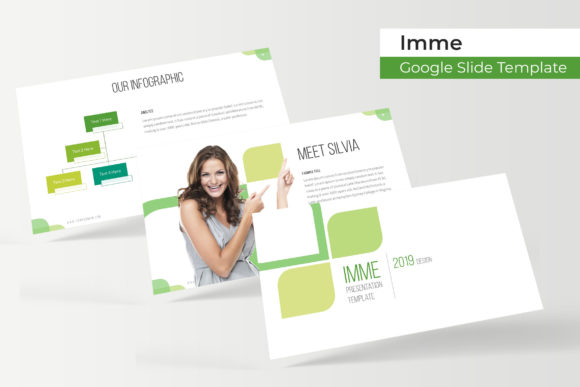
Data presentation remains one of the most challenging aspects of slide design. Generic chart tools often produce sterile visuals that fail to engage audiences. The handcrafted infographic components included in this template bridge the gap between raw data and visual storytelling. These are not automated charts generated by spreadsheet links; they are bespoke vector illustrations designed to highlight trends, comparisons, and processes conceptually. Because they are fully editable graphic objects, users can modify labels, adjust values visually, and recolor elements to match their specific dataset without breaking the design integrity.
The practical application of these infographics extends beyond simple statistics. They serve as metaphors for abstract concepts, making them particularly valuable for consultants and strategists explaining complex frameworks. The drag-and-drop nature of these elements, combined with their basis in master slides, ensures that even non-designers can integrate high-end data visualization into their work. This capability elevates the perceived value of the presentation, transforming standard bullet points into memorable visual anchors that aid audience retention and comprehension.
Specialized Layouts for Portfolios and Galleries
While many templates focus exclusively on corporate reporting, the Imme Google Slide Template integrates dedicated gallery and portfolio slides that cater to creatives, architects, and photographers. These layouts prioritize negative space and image fidelity, understanding that in visual portfolios, the content must take precedence over the container. The resizable picture placeholders are engineered to maintain aspect ratios or allow for intentional cropping without distortion, giving users precise control over how their work is framed.
These gallery sections function differently than standard image grids. They are designed with flow and pacing in mind, allowing for a mix of full-bleed hero images and detailed close-ups within a cohesive sequence. For freelancers and agencies, this eliminates the need to build custom portfolio decks from scratch for every client pitch. The section break slides interspersed throughout these galleries provide necessary breathing room, guiding the viewer through different categories of work or project phases. This thoughtful organization demonstrates professionalism and attention to detail, qualities that are essential when the presentation itself is a sample of the creator's capabilities.
Cross-Platform Compatibility and Asset Management
Modern workflows are rarely confined to a single software environment. The provision of both Google Slides and PowerPoint (PPTX) formats acknowledges the reality of collaborative work. While Google Slides offers superior cloud collaboration, many corporate environments still mandate PowerPoint for final delivery or offline editing. Having five widescreen PPTX files ensures that the design translates accurately between platforms, preserving fonts, animations, and layout positioning. This dual-format availability mitigates the risk of formatting errors that frequently occur when converting files between ecosystems.
Asset management is further streamlined through the included Readme First documentation and free font download links. Typography is often the silent failure point in template usage; missing fonts can render a beautiful design unusable. By providing direct access to the specific typefaces used, the template ensures typographic consistency from the moment of download. It is important to note, however, that all photographs and pictures used in previews are for illustration purposes only and are not included. This distinction encourages users to populate the template with authentic imagery relevant to their specific context, rather than relying on stock photography that may feel generic or disconnected from their actual message.
Practical Implementation Across Diverse Sectors
The versatility of a 150-slide library becomes apparent when examining its application across different user groups. For educators, the section break slides and infographic elements facilitate lesson planning and curriculum delivery, breaking down complex topics into digestible visual segments. The ability to switch between color variations allows teachers to code units by subject or difficulty level, aiding student navigation. For business executives, the widescreen format and data-centric layouts support quarterly reviews and strategic planning sessions, where clarity and authority are paramount. The master slide efficiency means that recurring reports can be updated rapidly without redesigning the wheel each cycle.
Researchers and academics benefit from the structured layouts that accommodate citations, methodology diagrams, and literature reviews without appearing cluttered. The clean, pixel-perfect illustrations help demystify dense academic content for broader audiences during conferences or public lectures. Meanwhile, hobbyists and community organizers can leverage the gallery and portfolio slides to showcase events, fundraising efforts, or member achievements with a level of polish typically reserved for commercial entities. In each case, the template serves as a force multiplier, amplifying the user's expertise through superior visual communication.
Optimizing Workflow Through Modular Design
Ultimately, the value proposition of the Imme Google Slide Template lies in its modular design philosophy. The combination of 30 slides per color variation creates manageable subsets that prevent choice paralysis. Users are not overwhelmed by 150 options simultaneously; instead, they can select a thematic direction and explore a curated set of complementary layouts. This modularity supports iterative design processes where presentations evolve over time. New slides can be added from other color sets or categories without disrupting the existing flow, provided the master slide relationships are respected.
The drag-and-drop functionality, grounded in professional design principles, lowers the barrier to entry for high-quality presentation creation. However, it does not sacrifice depth for simplicity. Advanced users will appreciate the unlocked vector elements and master slide accessibility, while novices will find safety in the predefined placeholders and alignment guides. This balance makes the template a sustainable tool for long-term use rather than a disposable asset for a single event. By integrating technical precision with aesthetic flexibility, it addresses the fundamental needs of modern visual communication: speed, consistency, and impact.