Elevating Visual Storytelling: A Comprehensive Guide to the Topmeals Culinary Presentation Template
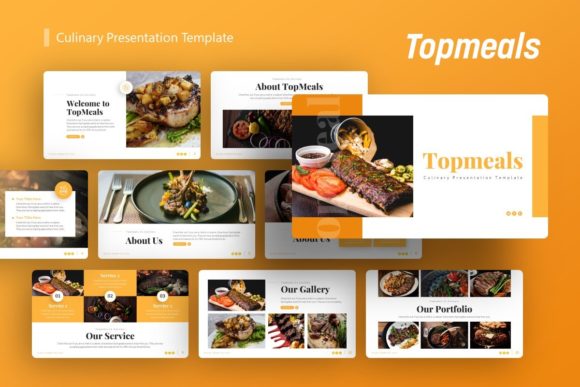
In the modern digital landscape, the ability to communicate ideas visually is just as critical as the content itself. Whether you are pitching a new restaurant concept, showcasing a photography portfolio, or outlining a corporate strategy for a creative agency, the medium through which you deliver your message defines how it is received. This is where specialized design assets like the Topmeals Culinary Presentation Template become indispensable tools. While the name suggests a niche focus on food and dining, this template represents a broader category of versatile, high-quality presentation frameworks designed to streamline professional communication across multiple industries.
Understanding how to leverage such a template requires moving beyond the surface level of "pretty slides." It involves grasping the intersection of design psychology, technical functionality, and narrative structure. This guide explores the purpose, significance, and practical application of the Topmeals template, helping beginners and experienced professionals alike understand why structured presentation design matters in today’s fast-paced business and creative environments.
The Role of Specialized Templates in Modern Communication
To understand the value of the Topmeals template, one must first understand the problem it solves. In an era of information overload, audiences have shorter attention spans and higher aesthetic expectations. A blank slide deck is often intimidating and time-consuming, leading to inconsistent branding and poor visual hierarchy. Specialized templates act as a pre-architected foundation, ensuring that every slide adheres to principles of good design without requiring the user to be a graphic designer.
The Topmeals template is specifically engineered to bridge the gap between niche culinary aesthetics and general business utility. While it excels in food-related contexts—such as menu presentations, catering pitches, or restaurant business plans—its underlying structure makes it equally effective for:
- Creative Agencies: Showcasing campaigns with bold imagery and clean typography.
- Corporate Profiles: Presenting company history and values with polished infographics.
- Startups and Pitch Decks: Structuring investment narratives with data-driven visuals.
- Personal Portfolios: Displaying photography or design work in a gallery-style layout.
This versatility is not accidental. It stems from a design philosophy that prioritizes modularity over rigidity, allowing users to adapt the visual language to their specific narrative needs.
Anatomy of a Professional Presentation Asset
When evaluating a presentation template, it is crucial to look at the technical specifications that dictate usability. The Topmeals template includes several key features that define its effectiveness as a professional tool. Understanding these features helps users maximize their efficiency and output quality.
Volume and Variety Through Master Slides
The template offers 36 unique slides for each variation. For a beginner, this number might seem arbitrary, but in presentation design, variety is essential for maintaining audience engagement. Repetitive layouts cause cognitive fatigue. By providing 36 distinct options, the template ensures that users can match specific content types—such as team introductions, financial charts, image galleries, or quote highlights—to appropriate visual formats.
Crucially, these slides are based on Master Slides. This is a technical feature in PowerPoint that allows global changes. If you update a logo or color scheme on the Master Slide, it propagates across all 36 slides instantly. This distinguishes a professional template from a collection of disjointed images, saving hours of manual editing and ensuring brand consistency throughout the deck.
Data Visualization and Infographics
One of the most significant challenges in business presentations is making data digestible. The Topmeals template includes handcrafted infographics that are fully editable within PowerPoint. Unlike static images imported from external software, these vector-based graphics allow users to modify percentages, labels, and colors directly in the presentation environment. This capability transforms abstract numbers into compelling visual stories, a skill that is increasingly demanded in startup pitch decks and corporate reporting.
Pixel-Perfect and Resizable Assets
The term "pixel-perfect" refers to crisp, high-resolution rendering regardless of screen size. Combined with resizable and editable graphics, this ensures that the presentation looks professional whether projected on a massive conference hall screen or viewed on a laptop during a Zoom call. Furthermore, the inclusion of picture placeholders with drag-and-drop functionality democratizes design. Users do not need to understand masking or cropping; they simply drop their content into designated zones, and the template handles the formatting automatically.
Practical Applications Across Industries
While the "Culinary" moniker suggests a specific use case, the structural integrity of the Topmeals template allows it to function effectively in diverse scenarios. Let us explore how different sectors can utilize this asset to enhance their communication strategies.
The Hospitality and Food Industry
For restaurateurs and chefs, this template serves its primary purpose. It provides the warm, appetizing aesthetic necessary for food marketing while offering the business slides needed for investor meetings. A common misunderstanding is that food presentations only need photos of dishes. In reality, successful hospitality pitches require operational breakdowns, market analysis, and team bios. Topmeals integrates these elements seamlessly, allowing a chef to present a cohesive vision that satisfies both the palate and the wallet.
Creative Agencies and Portfolios
Creative professionals often struggle to present their work without cluttering the slide. The template’s emphasis on negative space and image-forward layouts makes it ideal for portfolios. Photographers can use the gallery slides to create immersive visual experiences, while agencies can utilize the infographic slides to demonstrate campaign ROI. The clean, modern aesthetic signals professionalism and attention to detail, traits that potential clients actively seek.
Startups and Business Pitch Decks
In the startup ecosystem, clarity is currency. Investors review hundreds of decks monthly; a confusing or ugly presentation can kill a deal before the founder speaks. The Topmeals template provides a proven narrative structure. The 36-slide library covers every standard component of a pitch deck, from the "Problem/Solution" slide to the "Financial Projections" and "Ask." By using a professionally designed framework, founders can focus on refining their message rather than wrestling with alignment tools.
Navigating Files and Best Practices
Owning the template is only the first step; using it correctly requires adherence to best practices and an understanding of the included files. The download package typically contains the PowerPoint .PPTX file, a documentation file, and vector icons. The documentation is particularly valuable for beginners, as it explains how to manipulate master slides and replace placeholder content without breaking the design.
Understanding Licensing and Preview Images
A critical point of clarification for new users concerns the demo images. As noted in the product description, all images in the demo are for preview purposes only and are not included in the files. This is standard industry practice due to copyright licensing. Users must supply their own high-quality photography. This limitation should be viewed as an opportunity rather than a deficit; it forces the presenter to curate authentic visuals that genuinely represent their brand, rather than relying on generic stock photography that audiences have seen a thousand times.
Customization vs. Consistency
While the contents are easily customizable, users should exercise restraint. A common mistake is altering fonts and colors so drastically that the template loses its professional cohesion. The goal is to adapt the template to your brand, not to reinvent the wheel. Stick to the provided color palettes or make subtle adjustments that align with your corporate identity. Utilize the included vector icon set to maintain visual consistency; mixing these with disparate icon styles can create a jarring, unprofessional appearance.
Why Design Quality Matters for Credibility
Ultimately, the decision to use a premium template like Topmeals is an investment in credibility. Research in communication science consistently shows that visual appeal influences perceived trustworthiness. When a presentation is polished, organized, and aesthetically pleasing, the audience subconsciously attributes those qualities to the presenter and the content. Conversely, sloppy design suggests a lack of preparation or expertise.
For general readers looking to improve their presentation skills, templates serve as educational scaffolding. By analyzing how the Topmeals template structures information—how it pairs text with imagery, how it uses whitespace, and how it guides the eye through a slide—users learn fundamental design principles by osmosis. Over time, this exposure improves their own innate design sensibilities, making them better communicators even when they eventually move beyond templates.
Conclusion
The Topmeals Culinary Presentation Template is more than just a collection of attractive slides; it is a comprehensive communication toolkit. With its 36 master-based slides, handcrafted infographics, and versatile applicability across creative, corporate, and personal domains, it addresses the core challenges of modern visual storytelling. Whether you are launching a bistro, seeking venture capital, or displaying a photography portfolio, this template provides the structural integrity and aesthetic polish necessary to make a lasting impression.
By understanding the technical features and applying them with strategic intent, users can transform raw information into compelling narratives. Remember to utilize the documentation, respect the master slide architecture, and supply authentic imagery to replace preview assets. In doing so, you move beyond simple presentation creation and engage in true visual persuasion, a skill that remains invaluable across every facet of modern professional life.