Elevating Hygiene Interfaces with the Soap Icons Set Vector Collection
In the realm of digital design, clarity is king. When users navigate a mobile app or scan an infographic, they rely on visual shorthand to understand functionality instantly. This is where a specialized Soap Icons Set becomes an indispensable asset for UI/UX designers and illustrators. Focusing specifically on hygiene, cleaning products, and effervescent concepts, this vector illustration collection bridges the gap between aesthetic appeal and functional communication. Whether you are designing a skincare e-commerce platform, a laundry service application, or an educational health poster, having a cohesive set of editable stroke icons ensures your project maintains professional consistency while conveying complex ideas through simple, solid line styles.
The Power of Solid Line Style in Modern UI
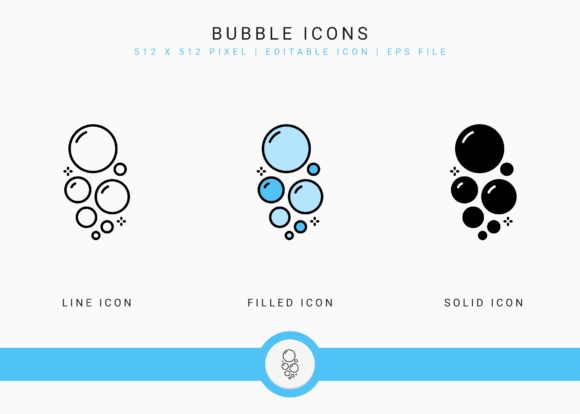
Visual trends in web and mobile design cycle frequently, but the solid line style remains a staple for good reason. Unlike purely filled silhouettes that can feel heavy at small sizes, or thin outline icons that may disappear on high-resolution displays, the solid icon line style offers a perfect middle ground. It provides enough visual weight to be noticeable without overwhelming adjacent text or interface elements. The Soap Icons Set leverages this balance, featuring bubble foam and effervescent concepts that retain their detail even when scaled down for toolbar navigation or list markers.
This specific stylistic choice also aids in accessibility. High-contrast solid lines are generally easier for users with visual impairments to distinguish compared to low-opacity or overly intricate designs. By utilizing a vector-based approach, these icons remain crisp on any device, from budget smartphones to 4K desktop monitors. For designers, this means less time worrying about pixelation and more time focusing on layout and user flow. The isolated background format further streamlines the workflow, allowing for drag-and-drop implementation without the need for tedious masking or background removal.
Versatility Across Formats: SVG and EPS
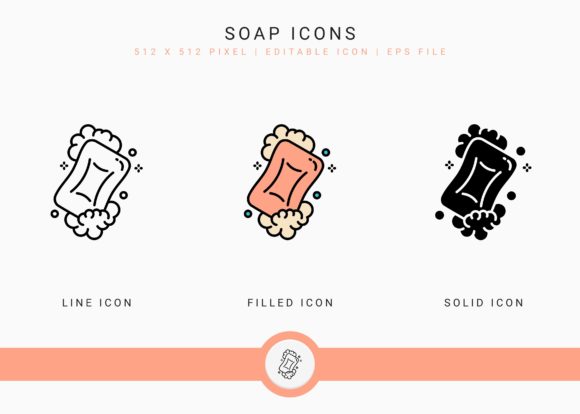
One of the most critical factors in selecting an icon pack is file compatibility. A professional workflow rarely relies on a single software ecosystem. This collection addresses that reality by providing three distinct variations: Filled Line Icon, Line Icon, and Solid Icon, all available in both SVG and EPS formats. Understanding the difference between these deliverables is key to maximizing their utility.
- SVG (Scalable Vector Graphics): Ideally suited for web design and mobile app development. SVGs are code-based, meaning they can be styled with CSS, animated with JavaScript, and scaled infinitely without quality loss. They are lightweight and essential for responsive design.
- EPS (Encapsulated PostScript): The industry standard for print and complex illustration work. If you are creating packaging design, large-format banners, or detailed infographics in Adobe Illustrator, EPS files preserve the vector paths necessary for professional printing and advanced manipulation.
Having both formats included eliminates the need for conversion tools that often corrupt anchor points or alter stroke weights. You get native compatibility whether you are coding a React component or preparing a brochure for offset printing.
Software Compatibility and Workflow Integration
Creative teams are diverse, and tool preferences vary wildly. The Soap Icons Set is engineered for broad interoperability. While Adobe Illustrator remains the industry heavyweight, modern design has democratized access to vector editing. This file package opens natively in:
- Adobe Illustrator: Full support for all layers, strokes, and effects.
- Inkscape: A powerful open-source alternative that handles SVG and EPS imports seamlessly for budget-conscious designers.
- Affinity Designer: Increasingly popular for its one-time purchase model and excellent vector rasterization capabilities.
- Gravit Designer: A browser-based and desktop hybrid tool ideal for quick edits and collaborative web projects.
This cross-platform readiness ensures that no team member is bottlenecked by file format issues. If a freelancer uses Inkscape and your in-house team uses Illustrator, collaboration proceeds without friction. Furthermore, because these are true vector files rather than flattened images, every element remains editable. Need to change the stroke width to match your brand guidelines? Want to adjust the corner radius of a soap bar to look softer? These modifications take seconds, preserving the integrity of the original design while adapting it to your specific needs.
Thematic Relevance: Bubble Foam and Effervescence
Generic soap icons often fail to capture the sensory experience of cleanliness. This set distinguishes itself by incorporating bubble foam and effervescent concepts directly into the iconography. These visual cues trigger psychological associations with freshness, activity, and efficacy. In a mobile app for a dishwasher detergent, for example, an icon showing active bubbles communicates "cleaning power" far better than a static bar of soap.
For infographic designers, these thematic elements serve as narrative devices. An effervescent tablet icon can represent dissolution or chemical reaction, while a foam-filled bottle suggests volume or lather. This specificity reduces cognitive load for the viewer; they don't have to read the label to understand what the product does. The visual language speaks for itself, making the content more engaging and digestible. When building a comprehensive hygiene system, mixing these dynamic icons with standard solid symbols creates a visual hierarchy that guides the user’s eye through the information.
Practical Considerations for Implementation
Before integrating the Soap Icons Set into your next project, consider how the editable stroke feature impacts long-term maintenance. Brand identities evolve. A company might shift from a bold, chunky aesthetic to a refined, minimalist look next year. Because these icons utilize stroke-based construction rather than expanded shapes, updating the entire library to match a new brand weight is a global operation rather than a manual redraw. This future-proofing makes the initial investment significantly more valuable over time.
Additionally, pay attention to the optical sizing when deploying these assets. While vectors scale mathematically, human perception does not. A 2px stroke might look perfect at 64px, but could appear too thick at 24px or too faint at 128px. Utilizing the separate Line and Filled Line variations allows you to select the appropriate optical weight for each context. Use the solid versions for primary navigation where instant recognition is paramount, and reserve the thinner line versions for secondary actions or decorative accents within content areas.
File Management and Extraction Best Practices
Digital asset management is often overlooked until something goes wrong. Upon acquiring this collection, proper file handling ensures longevity and organization. Please extract unzip your file after you download it to access the structured folder hierarchy. Keeping the source files compressed can lead to corruption over time and makes searching for specific icons difficult.
We recommend establishing a centralized asset library within your design system. Rename the SVG files semantically (e.g., icon-soap-bar-solid.svg rather than asset_042.svg) to improve searchability and developer handoff. Document which variation (Filled, Line, or Solid) is designated for which use case in your design tokens or style guide. This discipline prevents inconsistency across different screens and platforms. When developers receive clearly named, optimized SVGs extracted from the master EPS files, implementation errors decrease dramatically.
Enhancing User Experience Through Visual Consistency
Ultimately, the goal of using a curated set like this is to enhance the overall user experience. Disjointed visuals create subconscious distrust. If a hygiene app uses three different icon styles for similar functions, users may wonder if the underlying code is equally messy. The Soap Icons Set provides a unified visual grammar. Every curve, stroke terminal, and negative space relationship follows the same rules.
This consistency extends beyond mere aesthetics; it builds familiarity. Once a user learns what the effervescent tablet icon represents in one section of your app, they carry that knowledge forward. This reduces learning curves and increases task completion rates. For web designers creating landing pages, consistent iconography improves scannability, helping visitors locate key selling points faster. In an era where attention spans are short, efficient visual communication is not just a nice-to-have—it is a competitive advantage.
By combining technical flexibility with thoughtful thematic design, this vector collection serves as more than just clip art. It is a foundational component for building trustworthy, accessible, and visually coherent digital experiences in the hygiene and wellness sectors. Whether you are working in Affinity Designer for a print campaign or coding SVGs for a progressive web app, having the right tools at your disposal transforms the design process from a struggle into a seamless creative flow.