Desc Keynote Template: Evaluation Guide for Presentation Design
Selecting the right presentation asset requires balancing aesthetic appeal with functional utility. The Desc Keynote Template is a comprehensive design system intended for professionals who require high-volume slide variety without sacrificing visual consistency. With 150 total slides distributed across five distinct color themes, this template serves as a modular toolkit rather than a single linear narrative. Understanding the specific architecture and practical applications of this resource is essential for determining whether it aligns with your current workflow and project requirements.
Defining the Desc Keynote Template Architecture
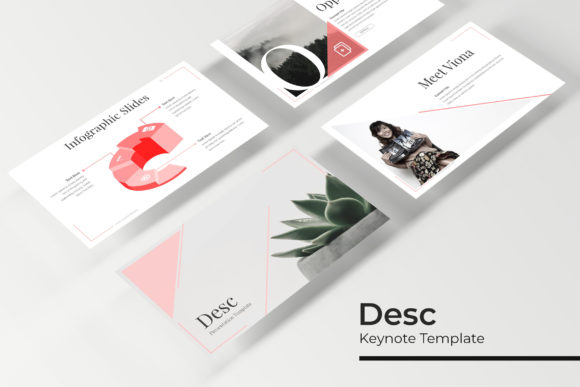
The Desc Keynote Template is structured around volume and variation. Unlike minimal templates that offer twenty to thirty slides, this package provides 150 unique layouts. These are organized into five separate PPTX files, each representing a different premade color palette. This segmentation allows users to maintain brand consistency by selecting a single master file or to create distinct visual identities for different departments or clients using the same underlying layout logic.
Each of the five color variations contains 30 dedicated slides. This structure ensures that every layout concept is available in every color scheme, eliminating the need for manual recoloring of individual elements. The template includes specialized sections for handcrafted infographics, portfolio galleries, section breaks, and data visualization. Crucially, the design relies on master slides and resizable graphic placeholders. This technical foundation supports a drag-and-drop workflow, allowing users to replace content without breaking the alignment or proportions of the original pixel-perfect illustrations.
Primary Use Cases and Strategic Fit
Evaluating the Desc Keynote Template requires identifying specific scenarios where its features provide tangible value. The template is particularly strong for organizations or individuals who produce frequent, varied presentations but lack dedicated design resources for each instance.
- Agency and Consultant Portfolios: The inclusion of dedicated gallery and portfolio slides makes this template suitable for creative professionals showcasing visual work. The grid-based layouts allow for flexible arrangement of images without requiring custom design work for every new case study.
- Data-Heavy Reporting: For quarterly reviews or annual reports, the handcrafted infographic slides offer pre-structured data visualization. Users can input metrics into existing frameworks rather than building charts from scratch, significantly reducing production time while maintaining a polished aesthetic.
- Multi-Brand Management: Marketing teams managing multiple sub-brands benefit from the five-color architecture. A single purchase covers diverse visual needs, provided the layout style suits all brands involved.
- Educational and Training Modules: The sheer volume of section break slides and content layouts supports long-form educational content where visual fatigue is a concern. Rotating through different layout types helps maintain audience engagement over extended periods.
Benefits and Workflow Efficiencies
The primary advantage of the Desc Keynote Template lies in its adherence to master slide technology. Because graphic placeholders are built into the master, resizing images or changing text does not distort the overall composition. This "pixel-perfect" approach reduces the time spent on micro-adjustments during the editing phase. Users can focus on content refinement rather than fixing broken alignments.
Furthermore, the inclusion of free font download links in the Readme file addresses a common friction point in template adoption. Licensing issues often delay projects; by utilizing freely available typography, this template ensures immediate usability without additional procurement steps. The widescreen format (16:9) also aligns with modern display standards, ensuring compatibility with contemporary conference room technology and video conferencing platforms.
Tradeoffs and Practical Considerations
Despite its robust feature set, the Desc Keynote Template presents specific tradeoffs that must be weighed during evaluation. The most significant consideration is the learning curve associated with 150 slides. Navigating such a large library requires an initial time investment to categorize and understand which layouts serve specific purposes. Teams accustomed to simpler templates may find the abundance of options overwhelming rather than liberating.
Additionally, prospective users must note that photographs and pictures used in preview materials are not included. These assets are for illustration purposes only. This necessitates access to a separate stock photography library or proprietary image assets. If your organization lacks high-quality imagery, the template’s visual impact may diminish until suitable replacements are sourced. The placeholder system facilitates easy swapping, but it does not solve the content creation challenge.
File management also requires attention. Working with five separate PPTX files means users must be disciplined about version control and file organization. Accidentally editing the wrong color variation or failing to save changes to the correct master file can lead to workflow inefficiencies. Establishing a clear internal protocol for template usage is recommended before deployment.
Technical Compatibility and Editing
While marketed as a Keynote-compatible resource via conversion, the native files are PPTX. Users operating exclusively within Apple Keynote should test the conversion process prior to committing to this template for critical deadlines. While most elements translate well, complex master slide relationships or specific vector effects occasionally behave differently when converted between ecosystems. Verifying that the drag-and-drop functionality remains intact after conversion is a necessary due diligence step.
Comparing Alternatives and Decision Criteria
Determining whether the Desc Keynote Template is the correct choice involves comparing it against alternative solutions based on specific project parameters.
When to Choose Desc Keynote Template
This template is a strong fit if your primary constraint is time-to-production for professional-grade visuals. If you need to generate multiple deck variations quickly and require a cohesive system that handles both data and imagery, the 150-slide count offers sufficient depth. It is also ideal for users who prefer PowerPoint-native editing environments but desire a more refined aesthetic than standard corporate themes.
When to Consider Alternatives
Alternatives may be preferable in several situations:
- Single-Purpose Decks: If you only need to create one specific type of presentation (e.g., a pitch deck), a specialized 20-slide template may be more efficient than navigating 150 generalist slides.
- Strict Brand Guidelines: If your corporate identity guidelines prohibit the use of pre-made infographic styles or specific layout structures, the customization effort required to adapt this template may exceed the cost of hiring a designer for a bespoke solution.
- Collaborative Cloud Workflows: Teams relying heavily on real-time cloud collaboration (Google Slides or PowerPoint Online) should verify that the master slide complexity translates effectively to web-based editors. Heavy local templates sometimes experience performance degradation or feature loss in browser environments.
Making the Final Selection
The Desc Keynote Template represents a middle-ground solution between basic free themes and expensive custom design services. Its value proposition is rooted in flexibility and volume. For evaluators, the decision should hinge on the frequency of presentation needs and the availability of complementary visual assets. If your workflow demands rapid iteration across multiple visual themes and you possess the necessary imagery to populate the placeholders, this template offers a scalable foundation. However, if simplicity, native cloud collaboration, or hyper-specific branding are higher priorities, exploring more targeted or platform-native alternatives may yield better long-term results. Careful assessment of these factors ensures the selected tool enhances rather than complicates the communication process.