Children Mental Health Brochure Bundle: A Design Resource for Awareness and Education
Communicating sensitive topics regarding youth psychological well-being requires a delicate balance of empathy, clarity, and professional presentation. For mental health professionals, educators, and non-profit organizations, the challenge often lies not in the message itself, but in how that message is visually packaged for families and children. The Children Mental Health Brochure Bundle serves as a comprehensive design solution intended to bridge the gap between clinical information and accessible community education. By providing pre-structured layouts and compassionate visual elements, this resource allows creators to focus on content accuracy rather than starting from a blank canvas.
The Role of Visual Design in Mental Health Communication
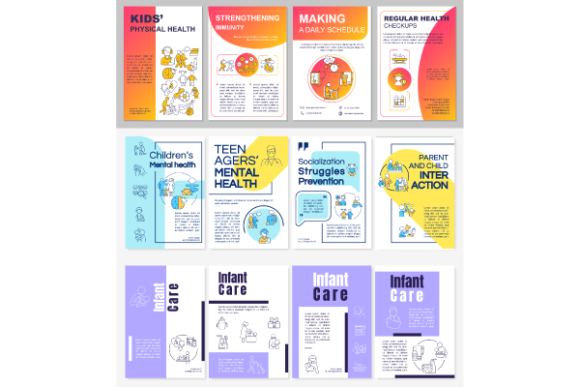
When addressing children's mental health, the aesthetic tone of printed materials significantly influences how the information is received. A document that appears overly clinical may intimidate parents, while one that is too childish might undermine the seriousness of the condition. The Children mental health brochure templates bundle addresses this nuance by utilizing linear icons and clean vector layouts. These design choices are intentional; linear iconography suggests transparency and simplicity, reducing cognitive load for readers who may already be experiencing stress or anxiety.
Effective mental health collateral must be scannable yet detailed. Families seeking information about ADHD, anxiety, or behavioral therapy often need to locate specific resources quickly. The structured nature of these templates ensures that critical data—such as hotline numbers, symptom checklists, and coping strategies—is highlighted through thoughtful hierarchy rather than buried in dense text blocks. This user-centric approach to design transforms a standard leaflet into a functional tool for support.
Versatility Across Print and Digital Formats
Modern advocacy campaigns rarely exist in a single medium. A successful outreach initiative requires consistency across physical handouts and digital platforms. This bundle is engineered for cross-platform adaptability, supporting a wide range of applications:
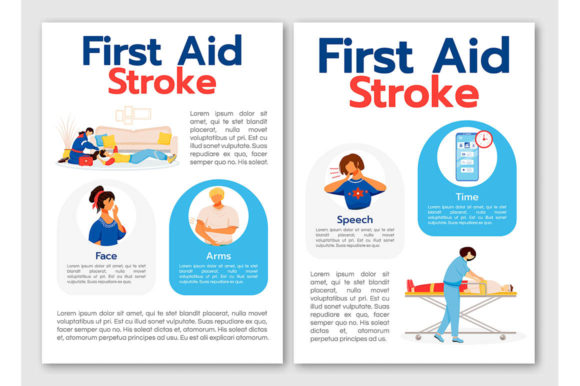
- Tri-fold and Bi-fold Leaflets: Ideal for clinic waiting rooms, school counselor offices, and community centers where quick, takeaway information is necessary.
- Booklets and Annual Reports: Comprehensive layouts suitable for organizational overviews, grant reporting, or in-depth guides for parents navigating complex care systems.
- Flyers and Advertisement Pages: High-impact designs for awareness months, fundraising events, or workshop announcements.
- Mobile App Screens and Presentations: Vector-based assets that scale perfectly for digital interfaces, ensuring brand consistency from print to pixel.
This multi-format capability means that an organization does not need to hire separate designers for their annual report and their weekly social media graphics. The cohesive visual language established by the bundle creates a recognizable and trustworthy brand identity, which is crucial when building rapport with vulnerable populations.
Technical Specifications and File Flexibility
For designers and marketers evaluating this resource, technical compatibility is just as important as aesthetic appeal. The Children Mental Health Brochure Bundle includes industry-standard file formats to accommodate various skill levels and software environments. Understanding these formats helps users maximize the utility of the product:
- AI (Adobe Illustrator) and EPS: These vector source files are essential for professional customization. They allow for infinite scaling without quality loss and enable deep editing of layout structures, color palettes, and typography. This is the primary format for creating bespoke booklet covers or modifying infographic data.
- SVG (Scalable Vector Graphics): Crucial for web and app development. SVGs maintain crisp edges on high-resolution mobile screens and can be animated via CSS for interactive digital brochures.
- PNG and JPEG: Raster formats provided for immediate use in presentations, email newsletters, or quick mockups where vector editing is not required.
The inclusion of both vector and raster formats ensures that the bundle is useful for solo practitioners using basic tools as well as large agencies with dedicated design teams. Furthermore, the vector layouts for presentation and advertisement pages are constructed with organized layers and global color swatches, significantly reducing production time during tight campaign deadlines.
Practical Applications in Real-World Scenarios
To understand the true value of these templates, it is helpful to examine specific use cases where they solve common communication problems. Consider a school district launching a new anti-bullying initiative. Using the Children mental health brochure templates bundle, the communications team can rapidly produce a tri-fold leaflet for students featuring approachable linear icons depicting conflict resolution steps. Simultaneously, they can adapt the same visual assets into a slide deck for a parent-teacher association meeting and a vertical flyer for hallway bulletin boards. The consistency reinforces the program’s legitimacy and makes the information easier to digest across different contexts.
Another scenario involves private therapy practices expanding their services to include adolescent telehealth. Trust is paramount in digital mental health services. By utilizing the mobile app screen pages and cover designs included in the bundle, practitioners can create a polished, professional digital presence that mirrors the quality of their clinical care. The pre-designed infographic templates are particularly valuable here, allowing therapists to visualize complex concepts like emotional regulation zones or mindfulness techniques without needing advanced illustration skills.
Evaluating Suitability and Customization Needs
While template bundles offer significant efficiency, users must approach them with a critical eye toward cultural competence and relevance. Mental health is deeply personal and culturally contextual. When utilizing the Children Mental Health Brochure Bundle, it is vital to assess whether the default imagery and iconography reflect the diversity of the community being served. Linear icons are generally neutral, but users should verify that the metaphors used (e.g., how "family" or "support" is depicted) align with their audience's lived experiences.
Additionally, consider the reading level and linguistic accessibility of the placeholder text. Templates provide structure, but the efficacy of the final product depends entirely on the quality of the customized content. Professionals should ensure that any medical or psychological terminology inserted into these layouts adheres to current best practices and is explained in plain language. The design facilitates readability, but it cannot compensate for jargon-heavy or insensitive copy.
Strengths and Considerations
The primary strength of this bundle lies in its specialized focus. Generic corporate templates often fail to capture the appropriate tone for pediatric mental health, resulting in materials that feel sterile or mismatched. This collection is purpose-built, saving hours of conceptual development. However, users should be aware that because these are templates, there is a risk of visual repetition if multiple organizations in the same geographic area utilize the same unmodified assets. To mitigate this, designers should leverage the AI and EPS files to alter color schemes, adjust spacing, and integrate custom photography alongside the provided vector icons.
It is also important to manage expectations regarding scope. While the bundle covers flyers, booklets, and app screens, it is a design asset, not a content strategy. It provides the vessel, not the message. Organizations without in-house writers or clinical consultants will still need to invest time in developing evidence-based content to populate these layouts effectively.
Maintaining Relevance in a Changing Landscape
Mental health awareness is an evolving field. New research, changing diagnostic criteria, and emerging social challenges mean that educational materials can quickly become outdated. Static design libraries may struggle to keep pace with these shifts. Recognizing this, BSD Studio updates their offerings regularly, introducing new topics and discounts every week. This dynamic approach ensures that subscribers have access to fresh visuals that reflect current conversations in child psychology and wellness.
For professionals committed to long-term advocacy, staying updated is part of maintaining credibility. Subscribing to BSD Studio provides a continuous stream of relevant assets, from seasonal mental health awareness graphics to updated infographic templates reflecting new therapeutic modalities. This ongoing relationship transforms a one-time purchase into a sustainable design partnership.
Ultimately, the Children Mental Health Brochure Bundle represents more than just a collection of files; it is a foundational tool for empathetic communication. By combining technical versatility with psychologically informed aesthetics, it empowers creators to produce materials that are as supportive as they are informative. Whether producing a simple leaflet for a clinic lobby or a comprehensive annual report for stakeholders, these templates provide the structural integrity needed to deliver vital messages with clarity and care. For those ready to enhance their visual communication strategy, exploring the full range of options and subscribing for regular updates at BSD Studio is a practical step toward more effective mental health advocacy.